IPTV vs cable TV
IPTV usually wins on price, flexibility and choice, while cable TV is proven but pricier and less flexible. IPTV offers more channels over the internet with no installation or lock-in, whereas cable needs hardware and often a contract.
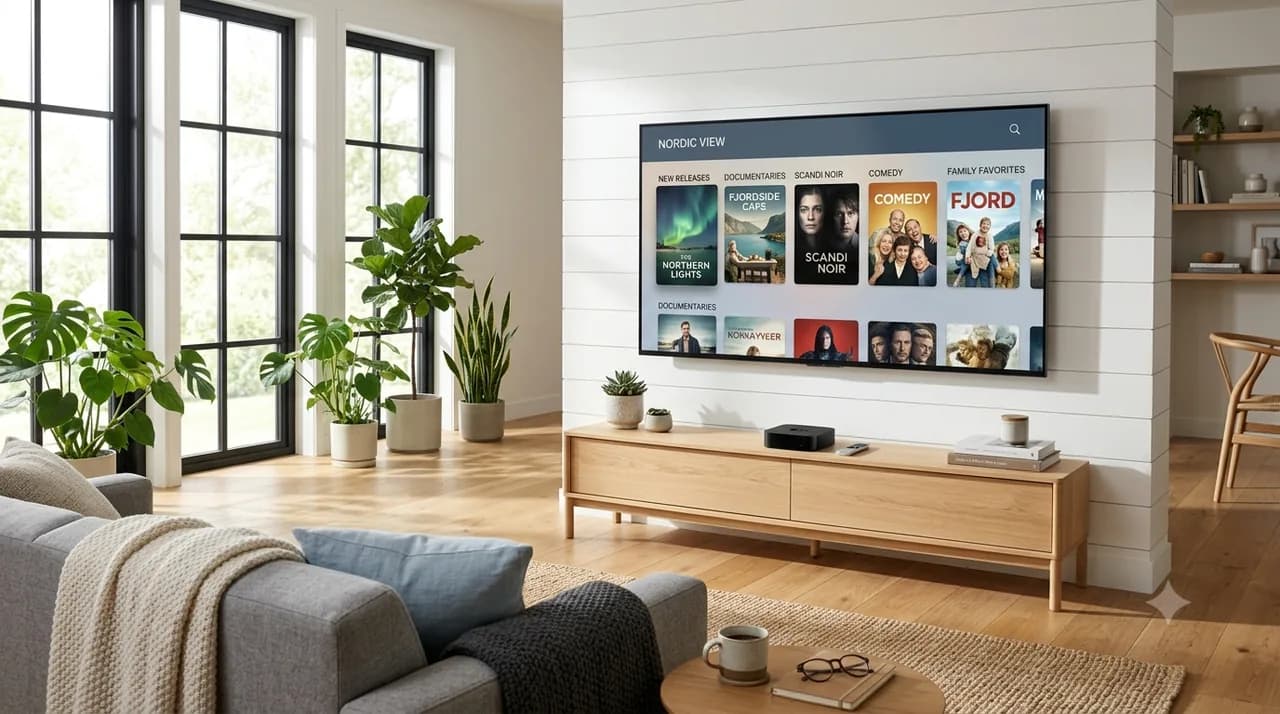
Which is cheaper?
IPTV — from 79 EUR/year, often below cable packages.
Which is most flexible?
IPTV: watch on any device, anywhere.
Does IPTV need installation?
No, just internet and an app.
Does IPTV have more content?
Yes, 43,000+ channels and 240,000+ titles.
Thinking of swapping cable for IPTV? It's one of the most common questions, and the honest answer is that for most homes IPTV makes more sense today. Here's a practical, side-by-side look — using general categories, not provider names.
Price
Cable packages are typically billed monthly and add up, often with hardware rental. IPTV Nordic is 79 EUR/year with no rental and no lock-in — usually the cheaper option. See the breakdown in what IPTV costs.
Flexibility
Cable ties you to a box and a room. IPTV plays on your Smart TV, phone, tablet or computer, at home or in 180+ countries. You watch where you want, when you want, with on-demand and catch-up.
Choice of content
A cable package offers a fixed lineup. IPTV opens up 43,000+ channels and 240,000+ titles across general categories — sport, film, kids, news and more. Browse them on our channels page.
Installation and setup
Cable often means a technician visit and a wait. IPTV needs only your internet connection and an app, with activation usually within 5 minutes.
What you give up — and what you don't
An honest comparison admits the trade-offs. The one real requirement IPTV adds is a decent internet connection; cable keeps working even if your broadband drops, which matters in homes with a shaky line. What you do not give up is the content itself — the same kinds of channels and shows live in general categories, just delivered a different way. For most homes with steady internet, that is a trade well worth making.
Making the switch without losing your routine
Switching is less disruptive than people expect. You keep your broadband and simply drop the expensive TV add-on, then install an app on the TV you already own. The categories you reached for on cable — sport in the evening, films at the weekend, something for the kids — are all there, so your viewing habits carry over even though the technology underneath has changed.
So which should you choose?
If you value price, flexibility and a big library, IPTV is the clear pick. If you prefer a fully fixed, hands-off setup, cable still has its place. Ready to try the flexible option? Compare plans and order IPTV Nordic.
Frequently asked questions
Is IPTV better than cable TV?+
For most people yes, thanks to a lower price, more content and flexibility with no lock-in. Cable may suit you if you want a fully fixed solution.
Is IPTV cheaper than cable TV?+
Usually. IPTV Nordic starts at 79 EUR/year, typically below traditional cable packages, with no lock-in.
Can I cancel cable and switch to IPTV?+
Yes. Since IPTV only needs internet, you can start right away and keep your existing connection.
What's the downside of IPTV vs cable?+
IPTV needs a stable internet connection; quality follows your bandwidth. With 15–25 Mbps for 4K, that's rarely an issue.
Do I lose my channels if I switch?+
No. The same kinds of channels and shows are in general categories — sport, film, kids, news — just delivered over the internet.
Is switching complicated?+
Rarely. You keep your broadband, drop the TV add-on and install an app on the TV you already own.